Medical Billing New Practice Startup Costs: Price the First Year

Medical billing new practice startup costs. A new practice needs a billing budget that separates getting started from operating each month. Ask for the price of the specific setup, software and service your practice will use before comparing the first-year commitment. Compare medical billing prices for your requirements.
Separate the opening project from monthly service
List the clinicians, entities, required systems and intended billing workflow. Ask what the quoted startup project delivers: configuration, enrollment assistance, testing, training or a defined combination. Keep optional work outside the baseline until the practice decides it is required.
A low opening fee can leave important tasks unpriced. Ask who confirms that the agreed configuration is ready, what your team must provide and how open items are handled. Do not treat a setup estimate as a promise of payer approval or a guaranteed opening date.
A useful next step is to compare prices for the complete scope.
For the related scope, review medical billing setup fees alongside this comparison.
Model a low-volume beginning without inventing revenue
Use your practice plan to define a lower-activity month and a later expected month. Ask the billing company to calculate both using its actual minimum, fixed charge or percentage base. These are planning scenarios, not predictions of patient visits or collections.
If the proposal includes software, identify whether its fee continues during setup or starts at another defined milestone. Ask when the first invoice becomes due and which amounts remain payable if the timetable changes. An understandable start date matters as much as a headline recurring rate.
Ready to put the components side by side? Request prices based on the same requirements.
Keep enrollment and connections visible
Ask which payer enrollments, clearinghouse connections and data imports belong to the startup scope. A new practice may have little historical data but still needs defined connections and staff preparation. Have the provider identify required practice actions and separately priced assistance.
Use aggregate clinician and workload information for initial prices. Detailed enrollment documents and any later patient data belong in the correct secure process. Keep government or payer application charges separate from a company service fee and confirm whether they actually apply.
Use the exclusions in your proposal when you compare prices for the options that fit.
For the related scope, review medical billing company prices alongside this comparison.
Compare the first year and a repeatable normal month
Add the actual one-time charges to the recurring amounts over the same twelve-month period. Keep a separate view of the normal month once setup is finished. This shows whether a lower first invoice reflects a smaller purchase, an introductory term or a different ongoing arrangement.
Request the renewal and ending terms before accepting the proposal. A useful startup price comparison gives the practice a clear set of deliverables, a visible payment calendar and a recurring model it can reproduce as activity changes. Choose scope that fits the practice rather than paying for an undefined bundle.
Bring the final specification together and compare the complete quoted prices.
Medical Billing New Practice Startup Costs worksheet
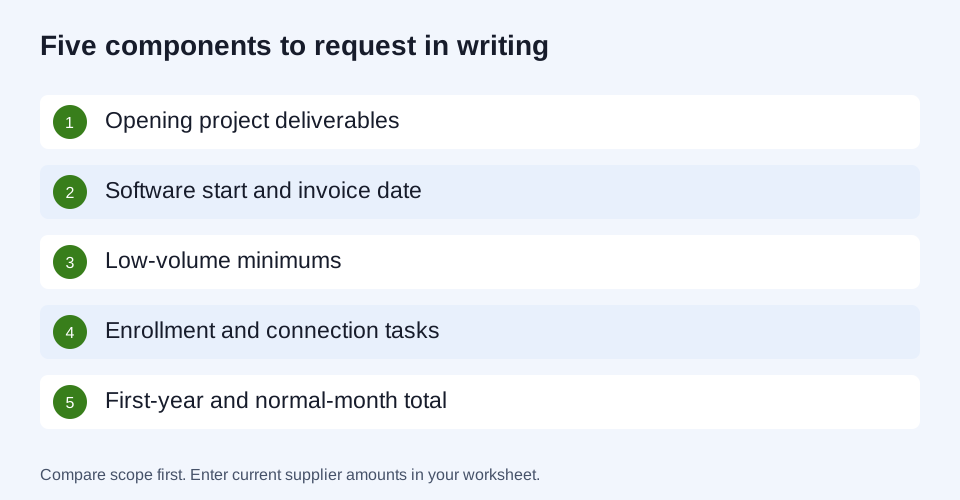
Keep a separate line for each component below. Ask both suppliers to use the same quantities and assumptions. Enter the current quoted amount, its billing unit and the work included. Leave an unanswered item open until the supplier responds; do not enter zero simply because the first proposal does not mention it.
| Component | Offer A | Offer B | Comparison question |
|---|---|---|---|
| Opening project deliverables | Enter quoted amount and unit | Enter quoted amount and unit | Does each amount buy the same scope? |
| Software start and invoice date | Enter quoted amount and unit | Enter quoted amount and unit | What preparation or equipment is excluded? |
| Low-volume minimums | Enter quoted amount and unit | Enter quoted amount and unit | Is this fixed, recurring or usage based? |
| Enrollment and connection tasks | Enter quoted amount and unit | Enter quoted amount and unit | What assumption changes this charge? |
| First-year and normal-month total | Enter quoted amount and unit | Enter quoted amount and unit | Who confirms the final included work? |
Read the five lines before choosing
Opening project deliverables. List the setup work required before the opening date and who confirms completion. Separate software configuration from billing workflow preparation. Ask which deliverables are fixed in the project price and which depend on additional practice decisions.
Software start and invoice date. Confirm when software access begins and when invoicing starts. Ask whether implementation and live use have different charges. Compare the total paid before the first normal operating month rather than assuming every subscription begins on opening day.
Low-volume minimums. Ask how monthly minimums apply while patient volume develops. Request the exact minimum, fee calculation and any stated start-period terms. A low percentage can still produce a meaningful fixed invoice when collections are initially limited.
Enrollment and connection tasks. Separate provider enrollment, payer connections and other dependencies from the general setup fee. Ask which tasks the company performs and which remain with you. Identify outside charges and avoid counting the same enrollment work in two supplier packages.
First-year and normal-month total. Prepare a first-year view with startup amounts separated from recurring charges. Then build a normal-month view using a clearly stated activity assumption. This prevents an opening discount or one-time project from obscuring the ongoing medical billing price.
For another component of the billing budget, review medical billing monthly minimum fees and keep that scope separate when the supplier itemizes the proposal.
Compare one expected case and one changed case
First calculate the total using the workload and scope you actually expect. Then ask each supplier to price one plausible change that matters to this purchase, such as a different quantity, longer period or additional required work. Use the same change for both proposals. This reveals which line changes without relying on an invented market average or assuming the opening price applies to every situation.
Keep a written distinction between the quoted total and your own planning estimate. Where a cost is not yet confirmed, identify the open question and request an answer before treating the comparison as complete. The objective is a usable purchasing decision: a defined requirement, a comparable price and a clear explanation of what happens next.
Use your completed worksheet to compare medical billing prices now and focus the discussion on the options that meet your needs.
Medical Billing New Practice Startup Costs questions
What belongs in a new-practice billing startup budget?
Include the specific setup, software, service, enrollment assistance and training your practice actually needs, with one-time and recurring amounts separate.
Can a new practice pay a monthly minimum?
Ask the company. A minimum can affect a lower-activity month even when the headline rate is percentage based.
Should the first-year total include setup fees?
Yes. Keep those fees visible and also calculate the recurring month after the opening work ends.
Have the main requirements ready? Get medical billing prices for your next decision. Keep the written scope beside each price so you can compare the whole offer.