Medical Billing Eligibility Verification Fees: Price the Actual Check

Medical billing eligibility verification fees. Eligibility verification prices should identify both the electronic transaction and the human follow-up. A response returned by software and a staff member resolving an unclear response are different amounts of work. Compare medical billing prices for your requirements.
Define electronic checks and manual verification
List the eligibility work the practice needs before asking for prices. Separate a routine electronic inquiry from checking unresolved information, contacting a payer or documenting a response. Ask the company which tasks its quote includes and which remain with the front desk.
CMS describes Medicare HETS as a real-time eligibility system using 270 requests and 271 responses. That description identifies a transaction route; it does not establish what a private billing company charges for its software or staff work. Keep technical access and purchased service scope distinct.
A useful next step is to compare prices for the complete scope.
For the related scope, review medical billing company prices alongside this comparison.
Ask what creates a billable transaction
Request the unit definition for the quoted charge. Does the company count an inquiry, a response, an appointment, a patient or another measure? Ask how retries, batch checks and repeat checks closer to the appointment date are treated. A unit price without that definition cannot produce a reliable invoice.
Use aggregate practice counts to create a normal-month scenario. Do not upload insurance cards, beneficiary identifiers or patient records into a general price form. Providers can explain their commercial model before a later secure implementation process needs detailed information.
Ready to put the components side by side? Request prices based on the same requirements.
Price unresolved responses and staff follow-up
Ask what happens when an electronic response is incomplete, unavailable or needs interpretation for the practice workflow. Identify who performs the next action and whether time, calls or follow-up work create an extra fee. Keep your own staff contribution visible.
Eligibility information is one part of preparing a claim. Do not buy a promise that every checked claim will be paid. Compare the company commitment to perform and document the requested checks, with clear responsibility for questions that require payer confirmation.
Use the exclusions in your proposal when you compare prices for the options that fit.
For the related scope, review medical billing software prices alongside this comparison.
Compare monthly totals at the same workload
Put the base subscription or service fee beside any included transactions and the price above the allowance. Ask whether all clinicians and locations share the allowance. Add separately priced manual work only when it belongs to the scope your practice requests.
A useful comparison has a normal-month total, a higher-activity scenario and a written explanation of the counting rules. If a company cannot reproduce the invoice from those inputs, leave the amount unresolved. Choose the service whose fees and handoffs your front desk and billing team can actually administer.
Bring the final specification together and compare the complete quoted prices.
Medical Billing Eligibility Verification Fees worksheet
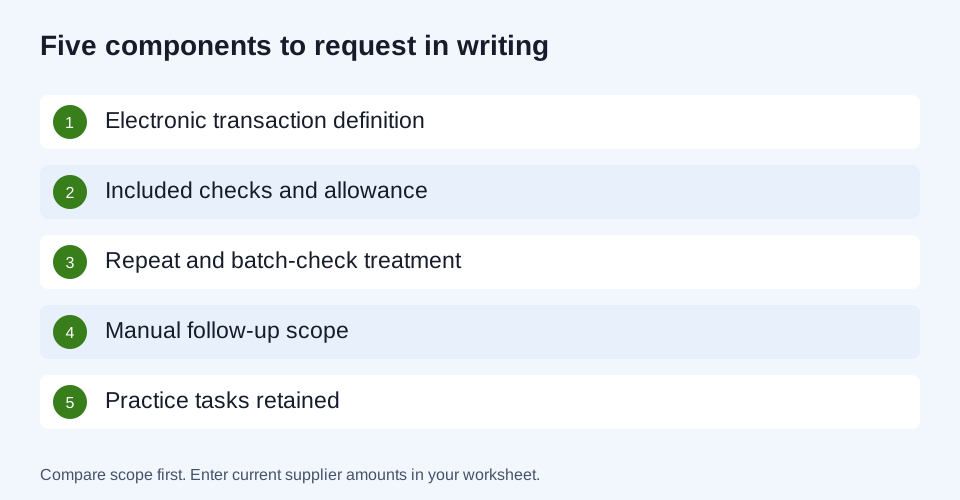
Keep a separate line for each component below. Ask both suppliers to use the same quantities and assumptions. Enter the current quoted amount, its billing unit and the work included. Leave an unanswered item open until the supplier responds; do not enter zero simply because the first proposal does not mention it.
| Component | Offer A | Offer B | Comparison question |
|---|---|---|---|
| Electronic transaction definition | Enter quoted amount and unit | Enter quoted amount and unit | Does each amount buy the same scope? |
| Included checks and allowance | Enter quoted amount and unit | Enter quoted amount and unit | What preparation or equipment is excluded? |
| Repeat and batch-check treatment | Enter quoted amount and unit | Enter quoted amount and unit | Is this fixed, recurring or usage based? |
| Manual follow-up scope | Enter quoted amount and unit | Enter quoted amount and unit | What assumption changes this charge? |
| Practice tasks retained | Enter quoted amount and unit | Enter quoted amount and unit | Who confirms the final included work? |
Read the five lines before choosing
Electronic transaction definition. Define the electronic check being purchased and the information it returns. Ask whether the fee is for a request, response, patient or another unit. Confirm the transaction definition before multiplying a quoted rate by your anticipated activity.
Included checks and allowance. Request the included number of checks and any overage charge. Distinguish a per-clinician allowance from a practice-wide allowance. Use aggregate workload information for the commercial request and reserve patient information for the appropriate secure operational process.
Repeat and batch-check treatment. Ask how repeat checks, batch submissions and failed requests are counted. Describe your intended check schedule so the supplier can estimate chargeable activity. The same patient may generate different billed activity under different counting rules.
Manual follow-up scope. Identify when an electronic response is escalated to manual work and what that work costs. Ask whether payer calls or investigation are included. Keep manual follow-up beside the electronic charge rather than assuming a transaction fee includes staff research.
Practice tasks retained. List scheduling, patient contact and unresolved-coverage tasks retained by your team. Ask how results and open questions reach the practice. Compare the full administrative workload while keeping eligibility information distinct from a promise that a particular claim will be paid.
For another component of the billing budget, review medical billing clearinghouse fees and keep that scope separate when the supplier itemizes the proposal.
Compare one expected case and one changed case
First calculate the total using the workload and scope you actually expect. Then ask each supplier to price one plausible change that matters to this purchase, such as a different quantity, longer period or additional required work. Use the same change for both proposals. This reveals which line changes without relying on an invented market average or assuming the opening price applies to every situation.
Keep a written distinction between the quoted total and your own planning estimate. Where a cost is not yet confirmed, identify the open question and request an answer before treating the comparison as complete. The objective is a usable purchasing decision: a defined requirement, a comparable price and a clear explanation of what happens next.
Use your completed worksheet to compare medical billing prices now and focus the discussion on the options that meet your needs.
Medical Billing Eligibility Verification Fees questions
Is an eligibility check the same as manual verification?
No. Ask whether the quoted scope includes only the electronic inquiry or also staff follow-up on unresolved information.
Do eligibility checks guarantee claim payment?
No. Compare the defined verification service and ask the payer to resolve coverage questions through the appropriate process.
Can software and a billing company both charge?
They may cover different work. Ask each party to identify its scope so overlapping charges are visible.
Have the main requirements ready? Get medical billing prices for your next decision. Keep the written scope beside each price so you can compare the whole offer.